
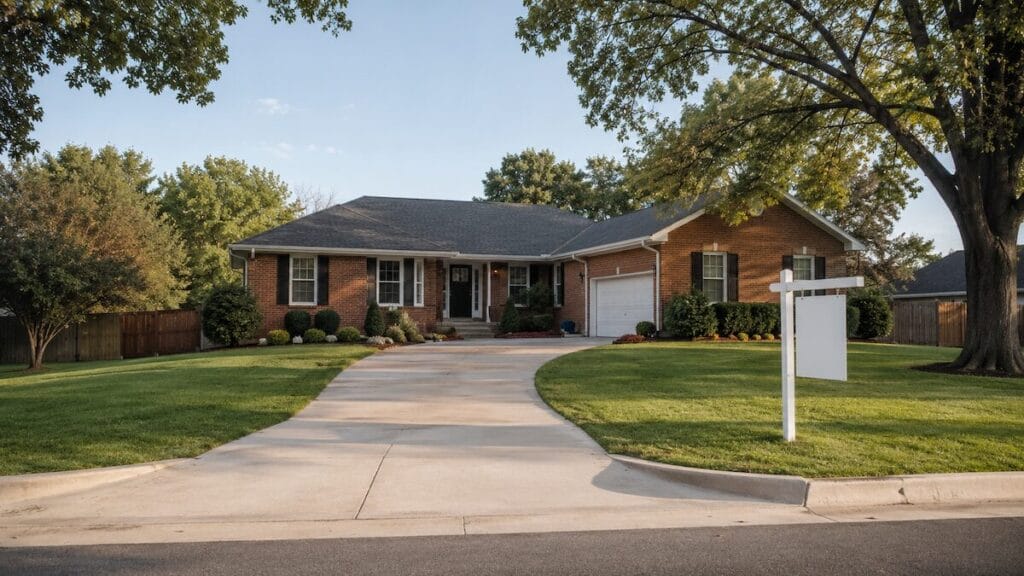
Quick Answer: Tulsa buyers negotiating power 2026 has quietly improved. More homes are sitting on the market longer, price reductions are up, and seller concessions are more common than they were two years ago. But it’s not a full buyer’s market. Well-priced homes in good condition still move fast. The leverage is real, it’s just selective.
Introduction
Tulsa buyers’ negotiating power in 2026 looks meaningfully different from what it did in 2022 or even 2023, and if you’ve been waiting for conditions to shift in your favor, you’ll want to understand what’s actually changed and what hasn’t. The Tulsa metro housing market has been moving toward balance over the past year, and buyers today are entering negotiations with more tools than in recent memory. That doesn’t mean it’s a buyer’s free-for-all. It means the market has matured into something more sustainable, and that’s genuinely good news for both first-time buyers and move-up buyers ready to make a well-timed move.
In Broken Arrow, Owasso, Jenks, Bixby, and across Tulsa proper, the experience of buying a home feels different from it did during the peak frenzy years. Bidding wars still happen, but they’re concentrated on a narrower slice of inventory: move-in-ready homes, priced correctly, in high-demand corridors. Step outside that band, and buyers are finding more room. Sellers are more willing to negotiate on price, contribute to closing costs, and offer concessions that simply weren’t on the table a few years ago.
What’s driving this shift? Rising inventory, longer days on market, increasing price reductions, and persistently elevated mortgage rates have kept some buyers on the sidelines. The result is a Tulsa market that isn’t soft, but is more balanced. For buyers who understand how to read those conditions, there are real opportunities to negotiate terms that work in their favor.
This post breaks down what the data shows, where the leverage exists, and how first-time and move-up buyers can put that knowledge to practical use.
At-a-Glance Summary
- Tulsa’s housing market in 2026 is trending toward balance, not a full buyer’s market
- Active inventory is up year-over-year, giving buyers more options and more time to decide
- Price reductions have increased significantly, creating real negotiating room on homes that have been sitting
- Homes are selling at roughly 97% of the list price on average, meaning negotiation is happening
- Seller concessions, including closing cost assistance and rate buydowns, are more common in 2026
- Well-priced, move-in-ready homes still move quickly, so preparation still matters
- First-time and move-up buyers both benefit, but in different ways, depending on price range
What Does “Negotiating Power” Actually Mean in a Real Estate Transaction?
Negotiating power in real estate is a buyer’s ability to influence the terms of a purchase, including price, concessions, contingencies, and closing timeline, without losing the home to a competing offer. In a seller’s market, that power is nearly zero. In a balanced market like Tulsa’s in 2026, it depends on the specific home, price range, and days on market.
The sale-to-list ratio is the clearest indicator. At around 97% in the Tulsa metro, that 3% gap represents roughly $9,000 on a $300,000 home in price negotiations alone, before any closing cost contributions or rate buydowns are factored in. Days on market tells a parallel story. Homes listed for more than 30 days without a contract are increasingly open to negotiation, and that pattern is most pronounced in higher price ranges where the buyer pool is naturally smaller.
Learn more about how Tulsa’s buying process works from search to close
Has Tulsa’s Inventory Really Changed Enough to Matter?
Yes. Active inventory in the Tulsa metro has climbed by more than 13% year-over-year in recent months, more than double the national growth rate. More homes available means less competition and more time to evaluate, which is a real shift for buyers who felt perpetually squeezed during the low-inventory years.
That said, inventory gains are not uniform. Entry-level and mid-range homes, roughly under $350,000 in the Tulsa metro, still move faster and attract more competition. Inventory has accumulated most in higher price ranges, where affordability constraints on mortgage rates have reduced the number of qualified buyers. This is where negotiating leverage is most concentrated in 2026, and where sellers are most motivated to work with a serious buyer.

Browse available Tulsa metro homes
Tulsa buyers negotiating power 2026: What Kinds of Concessions Are They Getting?
Seller concessions are contributions a seller makes to help a buyer cover the costs of purchasing. In today’s Tulsa market, they’re appearing far more frequently than during the seller’s market years.
The most common is seller-paid closing cost assistance. Closing costs typically run 2% to 3% of the purchase price, which on a $280,000 home can mean $5,600 to $8,400 out of pocket. Sellers contributing to those costs meaningfully reduces what a buyer needs to bring to closing, which is especially valuable for first-time buyers managing a down payment at the same time.
Rate buydowns are gaining traction in 2026. A seller-paid rate buydown reduces the buyer’s mortgage interest rate by contributing funds at closing that prepay interest, either temporarily for the first few years or permanently for the life of the loan. Some Tulsa sellers are finding that a $10,000 buydown has more impact on a buyer’s monthly payment than a $10,000 price reduction. According to local market reports, some listing agents are actively offering buydowns as an alternative to price cuts on homes that have been sitting on the market.
Other concessions include repair credits after inspection, seller-paid home warranties, and flexible closing timelines. These were rarely negotiable during the competitive years. In 2026, they’re back on the table for buyers who know to ask.
Download the free First-Time Buyer Guide to understand what to expect at every step
Is This the Right Time for First-Time Buyers to Stop Waiting?
For many first-time buyers in the Tulsa metro, 2026 is offering a more realistic entry point than the past few years. It’s not a perfect market, and mortgage rates in the 6.4% to 6.9% range are still meaningfully higher than the historic lows buyers have grown accustomed to. But improved inventory, softened competition, and willing sellers have created more workable conditions for buyers entering at the lower end of the price range.
Waiting for rates to drop to some ideal number is a strategy with real costs. Home prices in the Tulsa metro are forecast to appreciate 2% to 4% in 2026. A buyer who waits 12 months hoping for a 1% rate improvement may find the home they wanted now costs $8,000 to $12,000 more, effectively canceling out the rate benefit. The math rarely works in favor of extended waiting in a steadily appreciating market. And if rates do drop, refinancing is straightforward. If they don’t, you’re still in a home in a market with solid fundamentals.
There are also programs designed specifically for buyers who need help with upfront costs. The Oklahoma Housing Finance Agency (OHFA) offers down payment assistance and competitive rate options for qualifying buyers. Combine that with today’s negotiating conditions, and a prepared first-time buyer is in a better position than the headlines might suggest.
That said, readiness matters. Buyers who haven’t addressed credit issues, don’t have a pre-approval in hand, or are stretching uncomfortably to qualify should use this time to prepare rather than rush.
See more resources for first-time homebuyers in Tulsa

How Should Move-Up Buyers Think About This Market?
Move-up buyers, those selling a current home to purchase a larger or different one, are navigating a two-sided market in 2026. On the sell side, well-priced homes in good condition are still moving in the Tulsa metro, particularly at entry and mid-price points where demand remains solid. On the buy side, higher price ranges where many move-up buyers are shopping offer the most negotiating room.
This creates a real opportunity. A move-up buyer who prices and prepares their current home well can still achieve a strong sale, then negotiate more aggressively on the purchase side than would have been possible during the peak years. The key is coordination. A poorly timed transition creates stress and cost. Done thoughtfully, the move-up math can work well in 2026.
One dynamic specific to move-up buyers is the mortgage rate lock-in effect. Many existing homeowners are sitting on rates in the 3% to 4% range from 2020 to 2021 purchases. Moving means leaving that rate behind and taking on a new mortgage at current rates, which means that the monthly payment will be significantly higher even on a modestly more expensive home. Some move-up buyers are addressing this by using seller-paid buydowns on the purchase side or by factoring the rate differential into their price negotiations from the start.
Read about move-up buying in Tulsa
Download the Move-Up Buyer Playbook
By the Numbers
- Median Tulsa home sale price: $245,000 (February 2026, per Redfin), up 4.5% year-over-year
- Median list price (March 2026): $256,275, down 6.8% year-over-year, roughly three times the national decline rate
- Sale-to-list ratio: 97.25%, meaning buyers are negotiating an average of nearly 3% off the asking price
- Homes with price reductions: Increased from approximately 6% to 36% year-over-year, indicating widespread seller adjustment
- Active inventory growth: Up 13.6% year-over-year in March 2026, more than double the national rate of 6.2%
- Average days on market: Ranging from 49 to 56 days, depending on the month, compared to faster averages in prior years
- Mortgage rates: Averaging 6.4% to 6.9% for qualified buyers in 2026; most forecasts project a modest dip toward 6.1% to 6.5% by late 2026
- Homes selling above asking price: 19.12% of Tulsa sales in March 2026, down from the prior year, confirming reduced bidding war frequency
Sources: Redfin, Houzeo, Yahoo Finance/Realtor.com market data, local MLS reporting
Frequently Asked Questions
Is Tulsa currently a buyer’s market or a seller’s market?
Tulsa in 2026 is best described as a balanced market with a slight seller advantage in the entry- to mid-price range. Buyers have meaningfully more leverage than in 2022 or 2023, but it’s not a full buyer’s market. A buyer shopping for a move-in-ready home under $300,000 should still move decisively. A buyer shopping in a higher price range, or targeting a home listed for more than 30 days, has considerably more room to negotiate.
What’s the best way to negotiate in today’s Tulsa market?
Come in with a pre-approval and pull comparable sales before making an offer. Look carefully at days on market. Homes that have been on the market for 30 or more days are far more open to negotiation than fresh listings. Request concessions, including closing cost contributions or a rate buydown, as part of the offer structure rather than simply lowballing the price. A seller on day 45 of a listing is in a different mindset than one who listed last week.
Should I waive my inspection contingency to compete?
No. The frantic multi-offer conditions that pressured buyers into waiving inspections in 2021 and 2022 are largely gone. An inspection contingency protects you from inheriting expensive problems. Keep it in place. If a seller won’t accept a standard inspection contingency, that itself tells you something important.
What is a seller-paid rate buydown, and is it worth asking for?
A rate buydown is a seller concession that reduces the buyer’s interest rate at closing, either temporarily or permanently. In today’s Tulsa market, it’s a legitimate ask on homes that have been sitting. Your lender can show you whether the buydown outperforms a straight price reduction for your situation.
Will Tulsa home prices drop in 2026?
A broad decline is not what the data support. Most forecasts project 2% to 4% appreciation in 2026. What’s happening is a correction in how sellers are pricing, not a collapse in values. Overpriced listings are being adjusted. Well-priced homes are still selling.
Key Takeaways
- Tulsa buyers have more negotiating room in 2026, but leverage is concentrated in higher price ranges and on homes that have been sitting longer
- The sale-to-list ratio of around 97% means buyers are routinely negotiating below asking, before any concessions on closing costs or rate buydowns
- Price reductions have increased dramatically year-over-year, signaling that sellers are actively adjusting to a more balanced market
- Seller concessions, including closing cost contributions and rate buydowns, are more common in 2026 and are worth requesting in any offer
- Well-prepared first-time and move-up buyers are in a better position than headlines suggest, particularly when paired with OHFA assistance programs or coordinated buy-sell timing
Conclusion
The Tulsa housing market in 2026 is not the buyer’s market some have been waiting for, but it’s closer to balanced than it’s been in years. The data shows real shifts: more inventory, rising price reductions, sellers contributing to closing costs, and homes taking longer to sell. For buyers who understand how to read those signals, there is genuine leverage available.
For first-time buyers, improved inventory and available assistance programs make 2026 a credible entry window. For move-up buyers, higher price tiers offer some of the best negotiating conditions in recent memory. Neither group should mistake “more room” for “easy.” Well-prepared buyers with pre-approvals, clear budgets, and experienced agents are still the ones capturing the best outcomes.
Schedule a no-pressure conversation to talk through your options
Authority Bio
Deborah Green is a real estate agent with Real Broker, LLC, serving buyers and sellers across Tulsa, Broken Arrow, Bixby, Jenks, and Owasso. She specializes in first-time buyers, move-up buyers, downsizers, relocation clients, and probate sales.
📞 918-282-6385 ✉️ deb@deborahsellstulsa.com
Find out what your home is worth instantly: https://tulsaokhomes.com/propertyvalue
Sources & References
- Redfin: Tulsa Housing Market Data, February–March 2026
- Houzeo: Tulsa, OK Housing Market Trends 2026
- Yahoo Finance / Realtor.com: Real Estate Market Trends in Tulsa, OK (April 2026)
- Oklahoma Housing Finance Agency (OHFA): Homebuyer assistance programs, ohfa.ok.gov
- Norada Real Estate: Tulsa Housing Market Trends and Forecast 2025–2026