

If you’ve been researching how to buy a home and stumbled across the term “seller’s concession,” you’re not alone — it’s one of those real estate phrases that sounds more complicated than it actually is. A seller’s concession is money the seller agrees to contribute toward the buyer’s closing costs as part of the purchase contract. In simple terms, it’s a negotiated credit that reduces the out-of-pocket cash you need to bring to the closing table.
For first-time buyers in the Tulsa metro area — whether you’re looking in Broken Arrow, Owasso, Bixby, or Jenks — this can be a meaningful tool that makes homeownership more accessible. One of the biggest surprises for new buyers isn’t the down payment. It’s the closing costs. Closing costs typically run between 2% and 5% of the purchase price, and when you’re buying a $250,000 home in South Tulsa or a new build in Owasso, that’s $5,000 to $12,500 due at closing — on top of your down payment.
A seller’s concession can absorb all or part of that expense. Instead of you writing a bigger check, the seller agrees to credit you a set amount, which gets applied directly to your closing costs. The home still sells at the agreed price, but your cash burden at closing shrinks. It doesn’t work in every transaction — market conditions matter, but when it does, it can be the difference between closing on a home and waiting another year to save up.
Deborah Green, a Tulsa real estate agent with Real Broker, LLC, helps first-time buyers navigate exactly these kinds of strategies. If you’re not sure how to use this tool in your offer, Deborah is ready to walk you through it.

What Exactly Is a Seller’s Concession?
A seller’s concession is a written agreement in the purchase contract in which the seller credits the buyer with a specific dollar amount to help cover closing costs. It is not a price reduction. The sales price stays the same — what changes is how the money flows at closing. The seller contributes a portion of their proceeds to offset the buyer’s fees, which are paid to third parties like the lender, title company, and local government.
Closing costs in the Tulsa area typically include loan origination fees, appraisal fees, title insurance, prepaid homeowner’s insurance, property tax escrows, and recording fees. Depending on your loan type, some of these are fixed, and some vary by lender. For a buyer in Jenks purchasing a $280,000 home, total closing costs could easily range from $7,000 to $10,000.
A common misconception among first-time buyers is that sellers’ concessions are a form of charity or that asking for them will insult the seller. That’s simply not true. Concessions are a standard negotiating tool, used in transactions every day across Tulsa, Broken Arrow, and the surrounding metro. Sellers often factor the possibility into their pricing strategy from the beginning.
Why does this matter? Because it changes your affordability picture entirely. Instead of needing $30,000 saved — $20,000 for a down payment and $10,000 for closing costs — you might need $20,000 to $22,000 if the seller agrees to cover $8,000 in concessions. Deborah Green helps buyers understand how to structure these requests so they’re compelling to sellers while still protecting the buyer’s interests.

How Seller’s Concessions Work in a Real Tulsa Transaction
Here’s how the mechanics actually play out. You and your agent agree on an offer price—let’s say $265,000—for a home in Bixby. You also negotiate a seller’s concession of $6,000. The contract is written with a purchase price of $265,000 and a seller credit of $6,000 toward your closing costs. At closing, the $6,000 is deducted from the seller’s proceeds and applied to your closing cost line items.
Your lender needs to know about the concession upfront because it must be disclosed in your loan documents. Most loan programs cap how much a seller can contribute — and those limits vary based on your loan type and down payment size. Your lender will confirm what’s allowable based on your specific scenario.
One thing buyers in Broken Arrow and Owasso sometimes misunderstand: the home still has to appraise at or above the purchase price. If the property appraises at a low value, the deal may need to be restructured. This is why working with a knowledgeable local agent matters — Deborah Green knows how to structure offers that hold together through the appraisal process.
If you’re curious how concessions fit into the broader offer strategy for first-time buyers, the First-Time Homebuyer Guide on DeborahSellsTulsa.com covers the full picture from pre-approval to keys in hand.
Seller’s Concession Limits by Loan Type
Not every loan program allows the same amount in seller concessions. There are federally set limits based on your loan type and how much you put down. Exceeding these limits isn’t allowed, and any excess can’t simply be refunded to the buyer as cash.
Here’s a general breakdown of concession limits you’ll encounter when buying in the Tulsa metro:
| Loan Type | Down Payment | Max Seller Concession |
|---|---|---|
| FHA Loan | 3.5% | Up to 6% of purchase price |
| Conventional Loan | Less than 10% | Up to 3% of purchase price |
| Conventional Loan | 10%–24% | Up to 6% of purchase price |
| Conventional Loan | 25% or more | Up to 9% of purchase price |
| VA Loan | 0% | Up to 4% of purchase price |
| USDA Loan | 0% | Up to 6% of purchase price |
For most first-time buyers in Tulsa using FHA or a low-down-payment conventional loan, the practical ceiling is 3% to 6% of the purchase price. On a $250,000 home, that’s $7,500 to $15,000 — often more than enough to cover total closing costs.
VA loans, available to qualifying veterans and active-duty service members, have a unique 4% cap but also allow sellers to pay any or all of the buyer’s VA loan fees, which can add up to significant savings. If you’re a veteran looking in Owasso or Broken Arrow, this is worth discussing with your lender and agent.
When Seller’s Concessions Make Sense — and When They Don’t
Seller’s concessions work best in a balanced or buyer-friendly market. When inventory is higher, and homes sit on the market longer, sellers are more motivated to negotiate. In areas like South Tulsa or parts of Broken Arrow where new listings are competing for attention, asking for a concession is a reasonable and often successful tactic.
In a hot seller’s market, though, the calculus changes. When a home in Jenks or Bixby receives multiple offers over the asking price within the first weekend, asking for concessions may cost you the deal. A competing buyer who doesn’t ask for a concession — or offers above list price — will likely win. In those situations, Deborah Green helps buyers think through alternative strategies, such as asking the lender to roll some costs into the loan structure or negotiating seller-paid points to buy down the interest rate.
That said, even in competitive markets, concessions still happen. They’re more common on homes that have been on the market for more than 30 days, on properties with deferred maintenance, or in cases where the seller is highly motivated due to a job relocation or an estate sale. Knowing how to read the market is the difference between a concession request that gets accepted and one that costs you the home.
The Tulsa Housing Market page is a good resource for understanding current conditions in the metro so you can calibrate your expectations before making an offer.
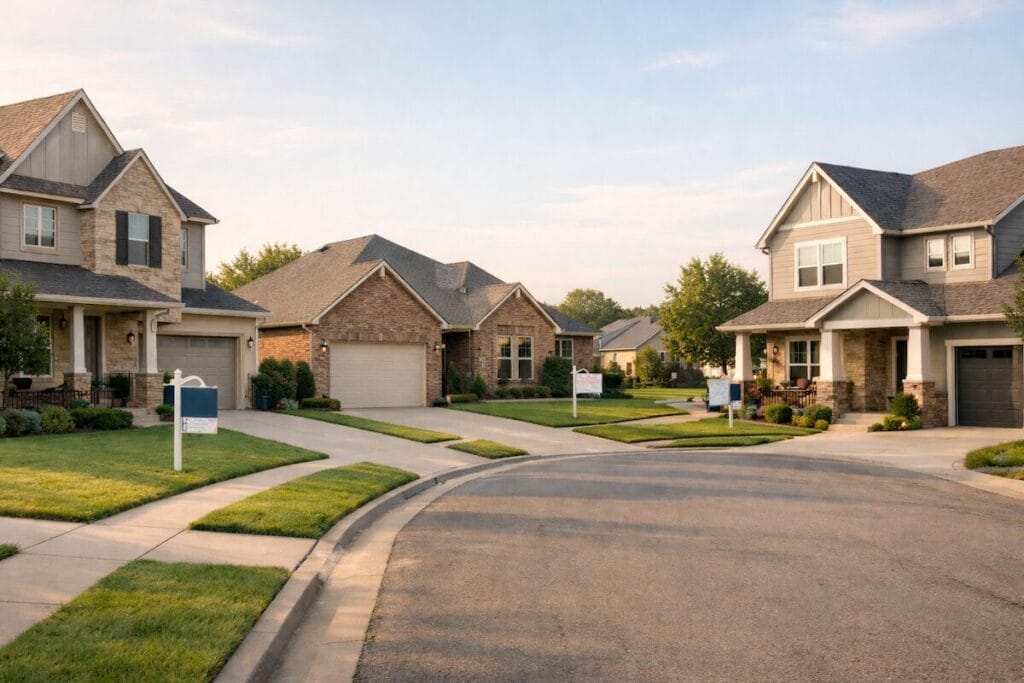
How to Ask for a Seller’s Concession the Right Way
Asking for a concession isn’t just a matter of putting a number in the contract. The framing, timing, and amount all affect whether the seller accepts, counters, or walks. Deborah Green coaches buyers on how to make requests that feel fair and well-reasoned rather than aggressive or presumptuous.
The most effective approach is to tie the concession request to realistic closing cost estimates. If your lender has provided a Loan Estimate showing $8,400 in closing costs, asking for $8,000 in seller concessions has a logical foundation. It’s not an arbitrary number — it reflects your actual need. Sellers and their agents respond better to requests that feel grounded.
You can also negotiate a slightly higher purchase price paired with a seller concession. For example, instead of offering $255,000 with a $7,000 concession, you might offer $261,000 with a $7,000 concession. The seller nets roughly the same amount, but your cash at closing drops significantly. This strategy only works if the home will appraise at the higher price, so it requires local market knowledge and careful judgment.
For move-up buyers in Tulsa who are also selling their current home, the dynamics can differ. The Move-Up Buyer Guide covers how to balance buying and selling simultaneously, including how concessions factor into both sides of the transaction.
FAQ: Seller’s Concessions in Tulsa
Does a seller’s concession reduce the sales price?
No — a seller’s concession does not change the official sales price of the home. The purchase price in the contract remains the same. What changes is the flow of money at closing: the seller agrees to contribute a specific dollar amount toward the buyer’s closing costs, which comes out of the seller’s proceeds at the time of settlement. The distinction matters because the appraised value must cover the full purchase price, and the concession is a separate line item in the closing disclosure.
Can a seller’s concession cover my entire closing costs?
It can, depending on the loan type and the amount you negotiate. FHA and USDA loans allow up to 6% in seller concessions, which in most Tulsa-area transactions is enough to cover the full closing cost estimate. However, if your concession exceeds your actual closing costs, the unused portion cannot be refunded to you as cash — it simply disappears. Your lender will confirm what can and cannot be applied, and Deborah Green will help you request an amount that aligns with your real expenses.
Will asking for a seller’s concession hurt my offer?
It depends on the market. In a slow or balanced market — which applies to many neighborhoods in Tulsa, Owasso, and Broken Arrow at various points in the year — a concession request is routine and rarely kills a deal. In a highly competitive market with multiple offers, it can put you at a disadvantage. The best approach is to ask your real estate agent to assess current conditions before drafting the offer. Deborah Green tracks market data closely and will give you honest advice on when to ask and when to hold off.
Are seller’s concessions the same as a price reduction?
No, and the difference matters in a practical way. A price reduction lowers your purchase price, which reduces your loan amount and potentially your monthly payment. A seller’s concession keeps the price the same but reduces the cash you need at closing. If you’re cash-constrained but can handle the monthly payment at the full price, a concession is often more useful than a price cut. Your lender can help you model both scenarios based on your specific financial situation.
Can I use seller concessions to buy down my interest rate?
Yes, and this is an increasingly popular strategy. Seller concessions can be used to pay mortgage discount points, which lower your interest rate for the life of the loan. In a higher-rate environment, asking for seller-paid points rather than a flat closing-cost credit can save you thousands over time. This works best when you plan to stay in the home long-term, since it takes a few years to recoup the upfront cost through monthly savings. Deborah Green can connect you with trusted Tulsa-area lenders who can run the numbers and show you exactly how the math works for your situation.
Ready to Make a Smart Offer in Tulsa?
Understanding seller’s concessions is one more tool that helps you approach a home purchase with confidence instead of anxiety. When used at the right time and in the right amount, a concession can meaningfully reduce your upfront costs and make buying in Tulsa — whether in Jenks, Bixby, Broken Arrow, or Owasso — more within reach than you thought.
Deborah Green works with first-time buyers throughout the Tulsa metro and takes the time to explain every available strategy, including how to negotiate concessions that actually get accepted. There’s no pressure, no jargon, and no rushing you into something that doesn’t fit your goals.
Start your home search or schedule a free buyer consultation with Deborah today.