
Quick Answer
Clearing out a house before selling in Tulsa usually doesn’t mean emptying every room. Remove boxes, clutter, personal paperwork and valuables first, and clear the walkways. Furniture and daily essentials can often stay. Whatever remains at closing needs to be settled in the contract. If the home is inherited, confirm who has authority before anything leaves.
What Needs to Leave Before Photos, and What Can Stay?
Photos and showings are the first deadline. Closing is the second. Here’s how the two differ.
Remove before photos
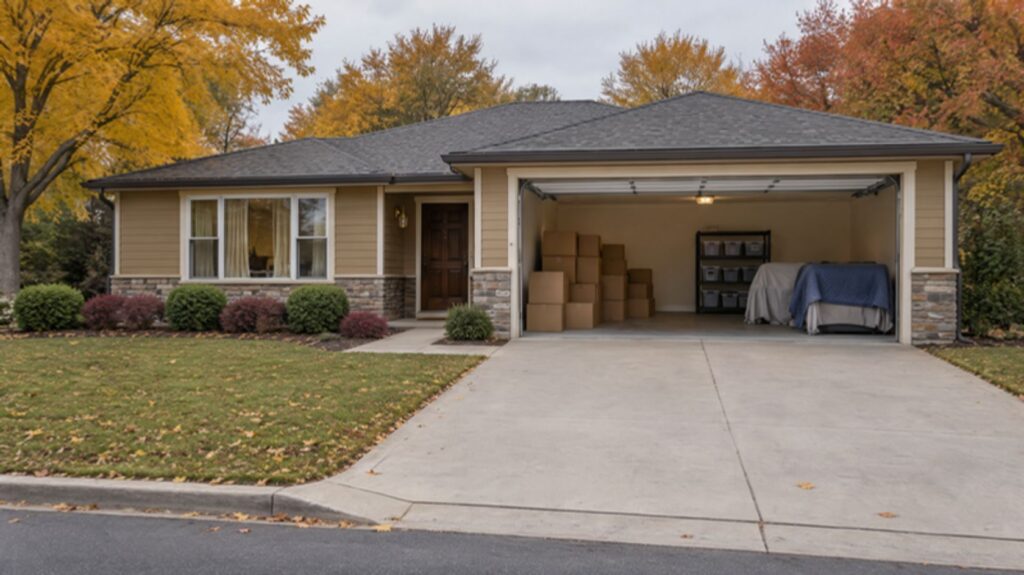
- Excess boxes. Stacks in the garage, closets and corners make rooms look smaller.
- Visible clutter. Clear counters, tabletops, bedside tables and the tops of dressers.
- Personal paperwork. Mail, bills, tax records and anything with an account number. Set it aside to keep or shred later.
- Valuables. Jewelry, cash, keys, small collectibles and medications.
- Furniture blocking movement. Extra chairs, a second sofa or oversized pieces that narrow a walkway or a doorway.
What can often stay during showings
- Selected furniture that shows how each room works.
- Everyday essentials if you still live there, such as dishes, toiletries and a week of clothes.
- Neatly organized belongings. A tidy closet or pantry with room to spare looks fine.
What must be resolved before closing
Anything still in the house needs a plan. The sales agreement should say what stays, what goes and who is responsible for removing it, with a date. Ask your agent and a title company or an Oklahoma real estate attorney how to word it.
Next step: my room-by-room staging checklist covers the last pass before photos.
Three Ways to Approach Clearing Out a House Before Selling in Tulsa
Pick the approach before you rent anything. The right one depends on your timeline, your budget and how much of the work your household can realistically do.
| Approach | What leaves before listing | Fits when | May not fit when |
|---|---|---|---|
| Clear it completely | Everything you aren’t moving or giving to heirs | You have time and everyone agrees | The timeline is tight or the work is too much for the household |
| Clear most of it | Unwanted, hazardous and personal items; furniture stays for now | You’re still living there or want to avoid storage | Rooms are too full to photograph or show |
| Sell as-is with contents | Only what you choose to take | Heirs live out of town, or time matters more than price | You want the widest pool of buyers |
Each path has a catch. Clearing everything first costs time and money before the sale pays you anything. Leaving the contents in place can narrow the pool of buyers willing to take the house on. If you’re leaning toward the third path, read my article on selling a house as-is in Tulsa.
Who Can Decide What Leaves an Inherited House?
If the house is yours and you’re moving, skip to the sorting section. If someone has died, slow down first. The person who lives closest, or who has helped the most, isn’t automatically the person with legal authority over the home and its contents.
That authority depends on the will, the probate process and Oklahoma law, so ask the estate’s attorney. For background, see who can make decisions about a Tulsa home as executor or heir. Until you know, photograph every room and hold off on giving away or discarding anything of value.
When several heirs are involved, settle the sentimental items before the first load leaves. Photograph each room first so everyone works from the same record. Agree in writing, even by email, on how you’ll handle items more than one person wants. That conversation is easier before the house is listed than after offers come in.
Set papers aside before you sort anything else: wills, deeds, vehicle titles, insurance policies, tax records, bank and retirement statements, and anything with an account number. Check pockets, books and kitchen drawers too, because cash, keys and documents turn up in odd places. Don’t shred anything until the person with legal authority, an attorney or a CPA says it can go.
How Should You Sort Everything?
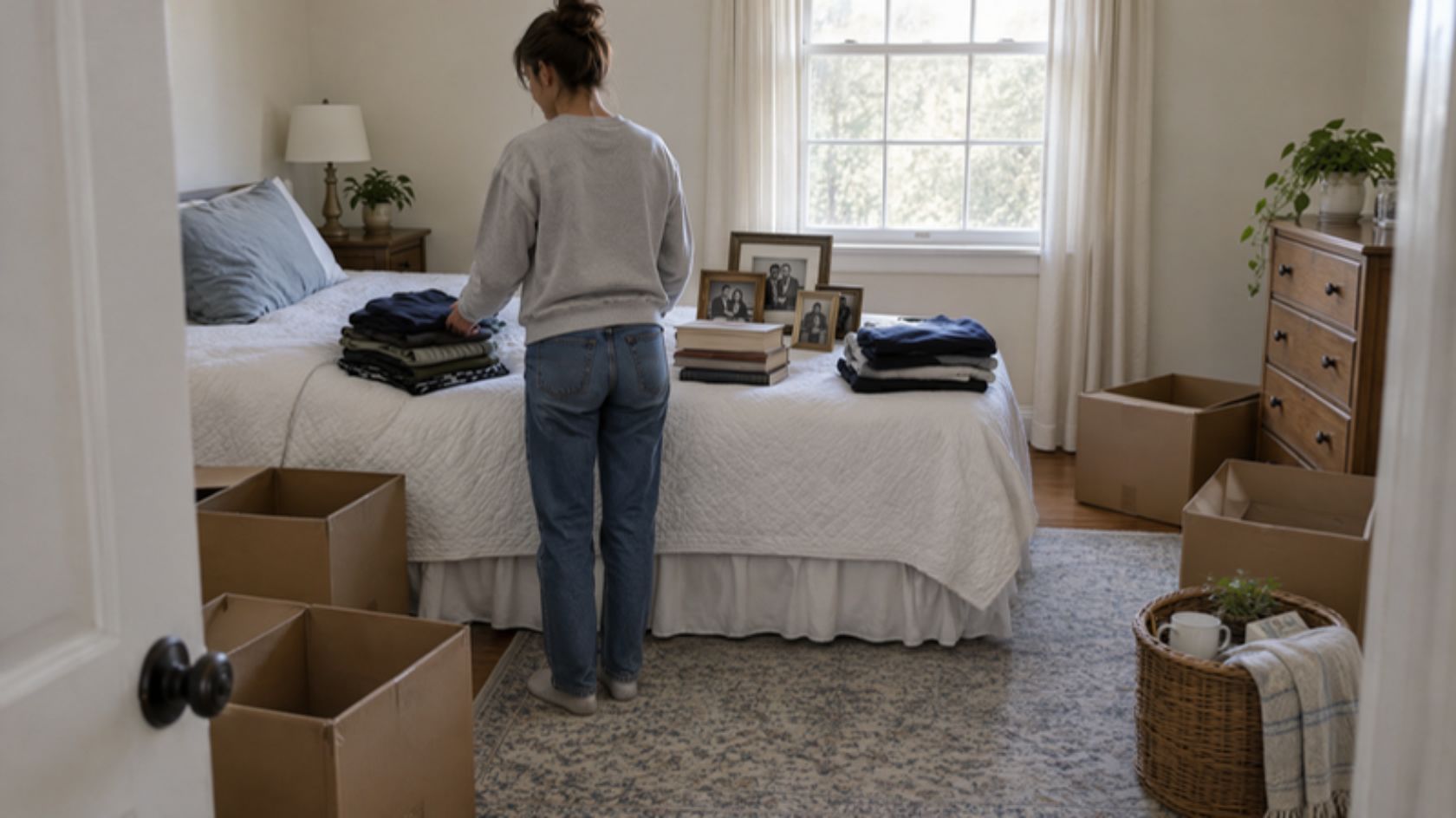
Work one room at a time and finish a room before starting the next. Start with the garage, a hall closet or a spare room, where decisions are easy, and leave photographs and keepsakes for last. Four piles are enough: keep, sell, donate and dispose.
Should You Check Value Before You Donate or Discard?
Yes, for anything that might carry real value, such as art, jewelry, collections and antiques. Ask a qualified appraiser or dealer for an opinion before it goes in a donation bin. Everyday furniture and housewares usually don’t need that step.
Do Donations Help at Tax Time?
Charities generally want items that are clean and usable. For donated furniture and household goods, you generally need to itemize to claim a charitable deduction (IRS Topic No. 506, last reviewed November 9, 2026).
Starting with tax year 2026, people who don’t itemize can deduct up to $1,000 ($2,000 if filing jointly) in cash gifts to qualified charities (IRS news release). That deduction doesn’t cover donated goods.
If you do itemize, household items generally must be in good used condition or better (IRS Publication 526, 2025 edition). Get a written acknowledgment from the charity for any contribution of $250 or more. A noncash deduction over $500 means filing Form 8283. A CPA can tell you whether any of this helps you, including for items donated from an estate.
What About Estate Sales and Resale?
Estate sale companies commonly price and run the sale for a fee or a share of what sells. Terms vary, so ask how the company is paid, what happens to unsold items and how long the process takes, and get the answers in writing. Plan for a second step, because unsold items may remain afterward.
When Is It More Than a Weekend Project?
If rooms are packed floor to ceiling, if you see signs of pests or water damage, or if the work isn’t physically safe for the people doing it, bring in professionals instead of pushing through. Wear gloves and sturdy shoes, use a mask in dusty spaces and don’t move heavy furniture alone.
Where Do Things Go in Tulsa?
I checked each source below on November 13, 2026. The City and M.e.t. pages don’t show review dates, so confirm fees, hours and rules before you load a truck. If you’re outside Tulsa city limits, check with your own city for curbside pickup.
Furniture, mattresses and empty large appliances
- Where: City of Tulsa bulky waste pickup, on your regular trash day.
- How to request: Online, by calling 311 or by emailing Tulsa311@cityoftulsa.org at least three days ahead. Online requests need your City utility customer ID and account number.
- Fee: $20 per 8 cubic yards plus a $20 scheduling fee beginning October 1, 2026. The scheduling fee applies even if items are left behind.
- Set-out: Items need to be out by 5 a.m. Keep electronics, appliances and tires separate.
- Limits: Four TVs or monitors combined, four tires without rims and 10 gallons of latex paint.
- Not accepted: Batteries, liquids, hazardous materials and contractor debris.
Paint, chemicals, cleaners, batteries, bulbs and cooking oil
- Where: Household Pollutant Collection Facility, 4502 S. Galveston Ave.
- Hours: Wednesdays and Saturdays, 8 to 11:30 a.m. and noon to 4:30 p.m.
- Tulsa residents: Free with a driver’s license or City utility bill.
- Nearby cities: Residents of Bixby, Broken Arrow, Claremore, Collinsville, Glenpool, Jenks, Owasso, Sand Springs and unincorporated Tulsa County need a voucher from the Metropolitan Environmental Trust first, (918) 584-0584, Monday to Friday, 9 a.m. to 4 p.m. The first 45 pounds is free, then $1.37 per pound.
- Saturdays: The page says the facility no longer issues vouchers on Saturdays and doesn’t state the year, so call (918) 591-4325.
- Not accepted: TVs, computers, tires, medical waste and ammunition.
Laptops, printers, phones and microwaves
- Where: M.e.t. recycling centers in Broken Arrow, Central Tulsa, Claremore, Downtown Tulsa, Glenpool and Sand Springs.
- Cost: Free. Monitors and TVs carry a fee, paid online. The page doesn’t list the amount.
- Not accepted: Large appliances, refrigerators, air conditioners and items over 50 pounds.
Medications and ammunition
- Medications: Any police department or sheriff’s office with a locked drop box, per the City’s disposal page. The page lists no locations or hours, so call ahead.
- Ammunition: Tulsa Police uniform division stations, up to 50 caliber, Monday to Friday, 8 a.m. to 4 p.m., per the same City page. Call (918) 596-9222.
Furniture and housewares to donate
- Where: Green Country Habitat for Humanity ReStores in Tulsa, Broken Arrow and Claremore.
- Confirm first: The page doesn’t list accepted items, hours or pickup, so call (918) 359-5555.
- Other options: Thrift stores and other charities set their own rules.
Dumpsters
- City program: The neighborhood dumpster program serves registered neighborhood associations, not individual households.
- Single house: A private roll-off rental works. The City’s page doesn’t address placement, so ask the rental company and your HOA before delivery.
How Long Does Clearing Out Take, and What Does Waiting Cost?
Time is the cost sellers undercount. Every week the house sits full is another week of property taxes, insurance, utilities and upkeep.
This hypothetical example uses invented figures, not Tulsa quotes or averages. They assume the house costs $1,200 a month to hold, which is about $277 a week ($1,200 x 12 months, divided by 52 weeks, rounded). Outside-help amounts are placeholders, and the family’s own time counts as free. Repairs, staging, selling costs, taxes and any change in sale price aren’t included.
| Approach and weeks to list-ready | Holding cost at $277 a week | Assumed outside help | Total |
|---|---|---|---|
| Family sorts and hauls on weekends (10 weeks) | $2,770 | $600 | $3,370 |
| Family sorts, hired crew hauls (5 weeks) | $1,385 | $1,500 | $2,885 |
| Full-service clear-out (2 weeks) | $554 | $3,500 | $4,054 |
Here the middle option costs least. Change one assumption and the answer flips. If holding the house cost $3,000 a month, about $692 a week, the totals become $7,520, $4,960 and $4,884. The full-service option would come out slightly ahead. Run the math with your own holding cost and your own quotes.
If you’d like to run it with your real numbers, we can walk through the house together and talk through what needs to leave before photos. Book a consultation. It doesn’t commit you to listing.
Do You Have to Clear It Out at All?
No. Some sellers leave the contents. That can make sense when heirs live far away, when no one can do the work, or when time matters more than price. What stays or goes at closing is addressed in the sales contract, so ask your agent and a title company or an Oklahoma real estate attorney how to handle personal property left behind.
If you’re the one downsizing, decide what fits the next home first and work backward from there. The Right-Sizing Guide is a good place to start.
Common Questions About Clearing Out a House
What should I ask a clean-out company before hiring them?
Get a written quote before any work starts. It should say what’s included and what isn’t, such as sorting, hauling, cleaning and hazardous items.
Ask whether hauling and disposal fees are in the price or billed separately, and what could change the final total. Ask who is responsible for anything left behind, and how it will be handled. Keep a copy of the agreement.
Should I hold an estate sale before selling?
It depends on what the house holds and how soon you need to list. An estate sale makes the most sense when there are enough sellable items to justify the company’s cut and the weeks it adds. Ask for the terms in writing, and plan how you’ll clear whatever is left.
Who pays for clearing out an inherited house?
Ask the estate’s attorney before you spend your own money. Whether clear-out costs can be paid from the estate, and what receipts to keep, depends on how the estate is set up. For the bigger picture, see what to do with an inherited house in Tulsa.
Next Step: Walk the House Before You Haul Anything
Before you rent a dumpster or call anyone, let’s look at the house together. I’ll walk through with you, we’ll talk about what needs to leave before photos, and at a listing appointment I show estimated net proceeds for three prices side by side, so you can see how time and price work together. Schedule a planning call. It’s a conversation, not a commitment to list.
Sources & References
This article is general information, not legal, tax or financial advice. Ask an Oklahoma attorney or a CPA about your situation. City of Tulsa, M.e.t. and Habitat pages were checked on November 13, 2026 and show no review dates.
- City of Tulsa: Bulky Waste Pick Up
- City of Tulsa: Household Pollutant Collection Facility
- City of Tulsa: Disposal of Non-Accepted Items
- City of Tulsa: Neighborhood Dumpster Program
- The Metropolitan Environmental Trust: Electronic Waste Recycling
- Green Country Habitat for Humanity: ReStore locations
- IRS: Topic No. 506, Charitable Contributions (last reviewed November 9, 2026)
- IRS: Charitable contribution deduction for taxpayers who do not itemize (IR-2026-135, November 10, 2026)
- IRS: Publication 526, Charitable Contributions (2025 edition, for 2025 returns)
About Deborah Green
Deborah Green is a real estate agent with Real Broker LLC, helping Tulsa-area clients since 1999. She serves Tulsa, Broken Arrow, Owasso, Jenks, Bixby, Midtown Tulsa and South Tulsa. Call 918-282-6385 or email deb@deborahsellstulsa.com.