
Quick Answer
If you’re asking what is my house worth in Tulsa, the useful answer starts with a catch: four different numbers get called “worth,” and they answer four different questions. An online estimate is a starting point. The county’s value is used for property taxes. An appraisal serves a lender. A real estate agent’s price recommendation is built to position your home against what buyers can choose today. None of them is a guarantee, and the number that matters most for your decision is what you would keep after the sale.
What Is My House Worth in Tulsa? The Four Numbers

Most owners have seen at least two of these numbers already, and they rarely match. That’s normal. Each one is made by a different source for a different purpose.
| Number | Who makes it | Built for | Main limit |
|---|---|---|---|
| Online estimate | A computer model | A quick starting point | No one has walked through your home |
| County value | Tulsa County Assessor | Property taxes | May not equal market value |
| Appraisal | A licensed appraiser | A buyer’s loan | Serves the lender, not your listing plan |
| Price recommendation | A real estate agent | Positioning your home to sell | An opinion, not a guarantee |
Online estimates: why they disagree
The Consumer Financial Protection Bureau (CFPB) explains that valuations differ because “they are estimates and may be based on different comps,” or may have been done “at different times or for different purposes.” It describes an automated valuation model as a computer-generated value that uses mathematical models. That’s a fair description of the estimates you see on home sites.
Before an appointment, I collect the automated estimates from Zillow, Redfin, RPR and Realtor.com. I want to know what you may have already seen, and I look for big differences between them. I don’t use them to set a recommended listing price. When they differ from my own analysis, I want to understand why and be ready to explain it to you. If you only want a quick starting number, the home value tool gives you one. Treat it as the first row of the table above, not the last word.
The county’s number
The Tulsa County Assessor’s FAQ says that “sales of similar properties are used to arrive at the property’s market value,” and that Taxable Fair Cash Value “may or may not equal the Fair Cash Value (Market).” In plain terms, your tax value and your selling value are related but not the same, and the tax value is not a price you can expect a buyer to pay.
Two other points from the FAQ matter if you’re selling or have inherited a home. It says that when the market value of a property goes up, the Assessor mails a Notice of Increase in Valuation, and “the owner has 30 calendar days from the mailing date indicated on the notice to appeal the current year value.” It also says annual increases in taxable value are capped, “unless the title is transferred and/or new improvements are made to the property.” For a home that changes hands, ask the Assessor’s office what that means for the next owner’s bill. I can’t answer that for you.
The appraisal
The CFPB describes an appraisal as a value from “a licensed real estate appraiser who does a full inspection of the property,” and calls it the most common type of valuation. It’s ordered through the buyer’s lender, so it answers the lender’s question: is this home enough collateral for this loan?
When an appraisal comes in below the contract price, the CFPB says the buyer “can often use the lower appraised value to negotiate a reduction in the sales price,” and that if the seller won’t reduce the price, the buyer may want to cancel the sale. For a seller, that makes an appraisal a negotiation point to plan for. Your agent’s price recommendation and the comparable sales behind it are the best preparation. For the pricing strategy side, including how price affects showings and time on the market, see How to Price Your Home to Sell in Tulsa.
How I Build a Price Recommendation
Before the appointment, I haven’t evaluated your home’s condition, so my early work is research and estimates, not a price opinion. I also prepare preliminary net-to-seller scenarios at several possible prices. They’re preliminary because I haven’t walked through the home yet, and they aren’t my pricing recommendation.
At the appointment, I walk through the home and assess its condition, updates and features. We go over comparable sales and current competition together. My recommendation rests on comparable sales, active and pending competition, the home’s condition and features, and current market conditions. I prefer recent, relevant comparable sales, generally starting around 90 days, and I widen that window when the property, price range, location or the available sales require it. Relevance matters more than a rigid cutoff.
Then I refine my recommendation and show you estimated net proceeds for three prices side by side, including the selected listing price. I provide the professional recommendation. You make the final decision about the listing price and strategy. For current market figures, I send people to the Tulsa Housing Market page instead of repeating numbers here that go stale.
What You Keep: Estimated Net at Three Prices
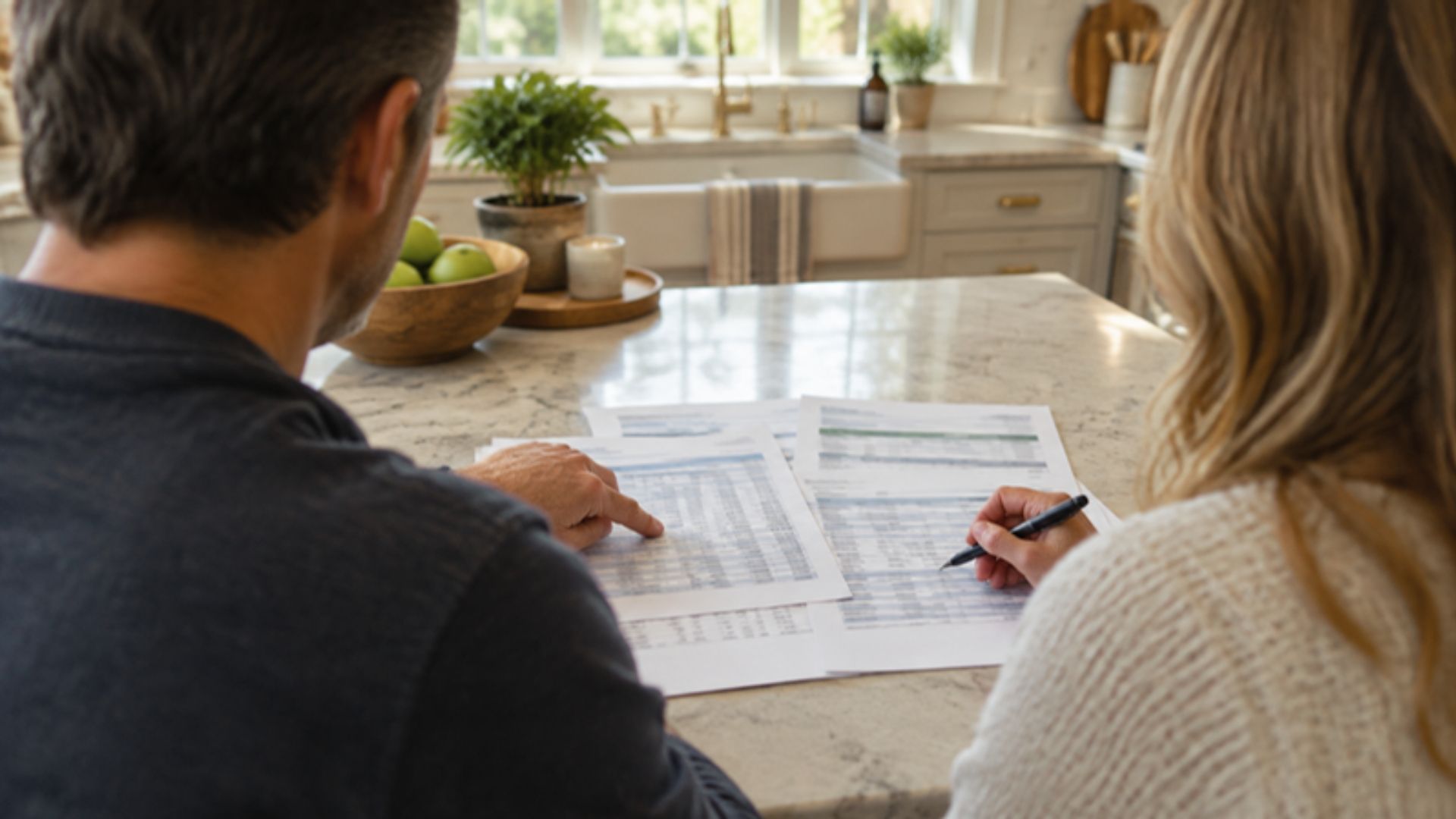
Price and proceeds are different things. A higher price doesn’t always leave you with a proportionally higher check, and a lower price isn’t always a loss. That’s why I show three prices together instead of one.
The table below is a hypothetical illustration. It is not a Tulsa average and not a prediction for any home. It assumes a mortgage payoff of $110,000 and total selling costs of 7 percent of the sale price, counted once. Both are assumptions for this example only. Your payoff comes from your lender, and your actual costs depend on your contract and your situation.
| Sale price | Selling costs (7%) | Mortgage payoff | Estimated net |
|---|---|---|---|
| $235,000 | $16,450 | $110,000 | $108,550 |
| $250,000 | $17,500 | $110,000 | $122,500 |
| $265,000 | $18,550 | $110,000 | $136,450 |
Not included: repairs or credits to a buyer, prorated property taxes, moving costs, and any taxes owed on a gain. These are estimated proceeds, not guaranteed sale prices or guaranteed net amounts. For a fuller look at what selling costs, read The True Cost of Selling a Home in Tulsa, and for how your equity fits in, see Tulsa Home Equity.
If you’d like to see this for your own home, book a home value and estimated proceeds consultation. We’ll look at the comparable sales, walk through the home, and compare estimated net at three prices. It doesn’t commit you to listing.
Which Number Fits Your Situation
If you’re downsizing, your next purchase depends on what you keep, so the net comparison matters more than any single value. Start with the net at a few prices, and see Downsizing in Tulsa for the wider picture.
If you’ve inherited a home, online estimates and county records describe the property as records show it, not as it stands today. A home that has been empty, or is full of belongings, may need a walkthrough before any number means much. Two posts cover that ground: Inherited a House in Tulsa: Sell, Keep or Rent It? and Selling a House As-Is in Tulsa.
If you’re moving up, you probably need a net figure to plan your next purchase, and a range is more useful than a single price. An online estimate alone may not fit any of these situations, because it can’t see condition, updates or competing listings.
Getting Ready for a Pricing Conversation
- Ask your lender for a mortgage payoff figure. Your monthly statement balance is not the same thing.
- Gather a list of updates and repairs with dates, and any receipts you have.
- Write down what you know about the home’s problems. Disclose what you know. Disclose, disclose, disclose is the rule I work by, and it protects you.
- Save the online estimates you’ve seen, so we can talk about why they differ.
- Ask any agent which comparable sales they used, how recent they are, and why those homes are the right comparisons.
For help with the home itself, see Preparing Your Home for Sale in Tulsa. Legal and tax questions specific to your situation belong with an Oklahoma real estate attorney or a CPA.
Your Next Step
If you’re thinking about selling in Tulsa, Broken Arrow, Bixby, Jenks or Owasso, the best next step is to see your numbers before you decide anything. Book a home value and estimated proceeds consultation, and bring the estimates you’ve found. If you want the full picture first, start with selling in Tulsa.
Sources & References
- Consumer Financial Protection Bureau: Why did I receive different valuations during the mortgage loan application process? Page last reviewed June 27, 2024. Reviewed November 7, 2026.
- Consumer Financial Protection Bureau: My appraisal is less than the sale price. What does that mean for me? Page last reviewed September 11, 2024. Reviewed November 7, 2026.
- Tulsa County Assessor: Frequently Asked Questions. No date shown on the page. Reviewed November 7, 2026.
About Deborah Green
Deborah Green is a real estate agent with Real Broker LLC, helping Tulsa-area clients since 1999. She serves Tulsa, Broken Arrow, Bixby, Jenks, Owasso and nearby communities. Call 918-282-6385 or email deb@deborahsellstulsa.com.