
DOWNSIZING IN TULSA
Your Guide to Downsizing in the Tulsa Metro
Downsizing in Tulsa is the process of selling a larger home and moving into a smaller, lower-maintenance property (such as a patio home, condo, or single-level home) to simplify life, reduce expenses, and align your housing with current needs. Downsizing in Tulsa often requires coordinating pricing strategy, financing, and closing timelines to avoid temporary housing or financial overlap.
In the Tulsa metro, many downsizers transition to single-level homes, patio homes, townhomes, or condominiums, typically priced between $250K–$600K, depending on the neighborhood and amenities.
Deborah Green is a Tulsa real estate agent who has lived in the Tulsa metro since 1995 and has helped numerous homeowners successfully downsize into patio homes, condominiums, and single-level properties across Broken Arrow, Bixby, Jenks, South Tulsa, Owasso, and Midtown Tulsa. Downsizing often involves both selling and buying at the same time, and coordinated planning ensures a smooth transition.
For many Tulsa homeowners, downsizing becomes the right choice when a large home no longer fits daily routines, maintenance preferences, or long-term plans. Whether the goal is one-level living, HOA-maintained communities, walkability, or simply a more manageable home, Tulsa offers strong options for every type of downsizer.
If you are also preparing to sell a longtime home, you may find the Selling a Home in Tulsa guide helpful as you begin planning your transition.
Who This Downsizing Guide Is For
This downsizing guide is designed for homeowners in the Tulsa metro area who are considering selling a larger home and purchasing a smaller, lower-maintenance property.
It is especially helpful for:
Homeowners in South Tulsa, Broken Arrow, Jenks, Bixby, Owasso, or Midtown Tulsa who have built significant equity over several years
Empty nesters transitioning out of two-story family homes
Retirees seeking single-level living or reduced maintenance
Homeowners interested in patio homes, townhomes, or condominiums with HOA-managed lawns
Buyers evaluating whether to sell first or purchase first
Tulsa homeowners coordinating both selling and buying at the same time
Homeowners looking to reduce property taxes, yard maintenance, or overall monthly expenses
If you currently own a home in the Tulsa metro and are considering a move into a smaller, more manageable property, this guide outlines the financial considerations, neighborhood options, timeline strategy, and coordinated transaction steps involved in downsizing successfully.
Is Downsizing Right for You?
Here are the most common reasons Tulsa homeowners choose to downsize:
Kids have moved out and the home feels too large
Maintaining a big yard or two-story home isn’t enjoyable anymore
Desire for a simpler, easier-to-manage space
Wanting to free up time and money for travel, hobbies, and family
Reducing monthly expenses or property taxes
Moving closer to loved ones or into a more walkable area
Transitioning into a long-term “forever home”
If you relate to any of these, downsizing may be the perfect next step.
How the Downsizing Process Works in Tulsa
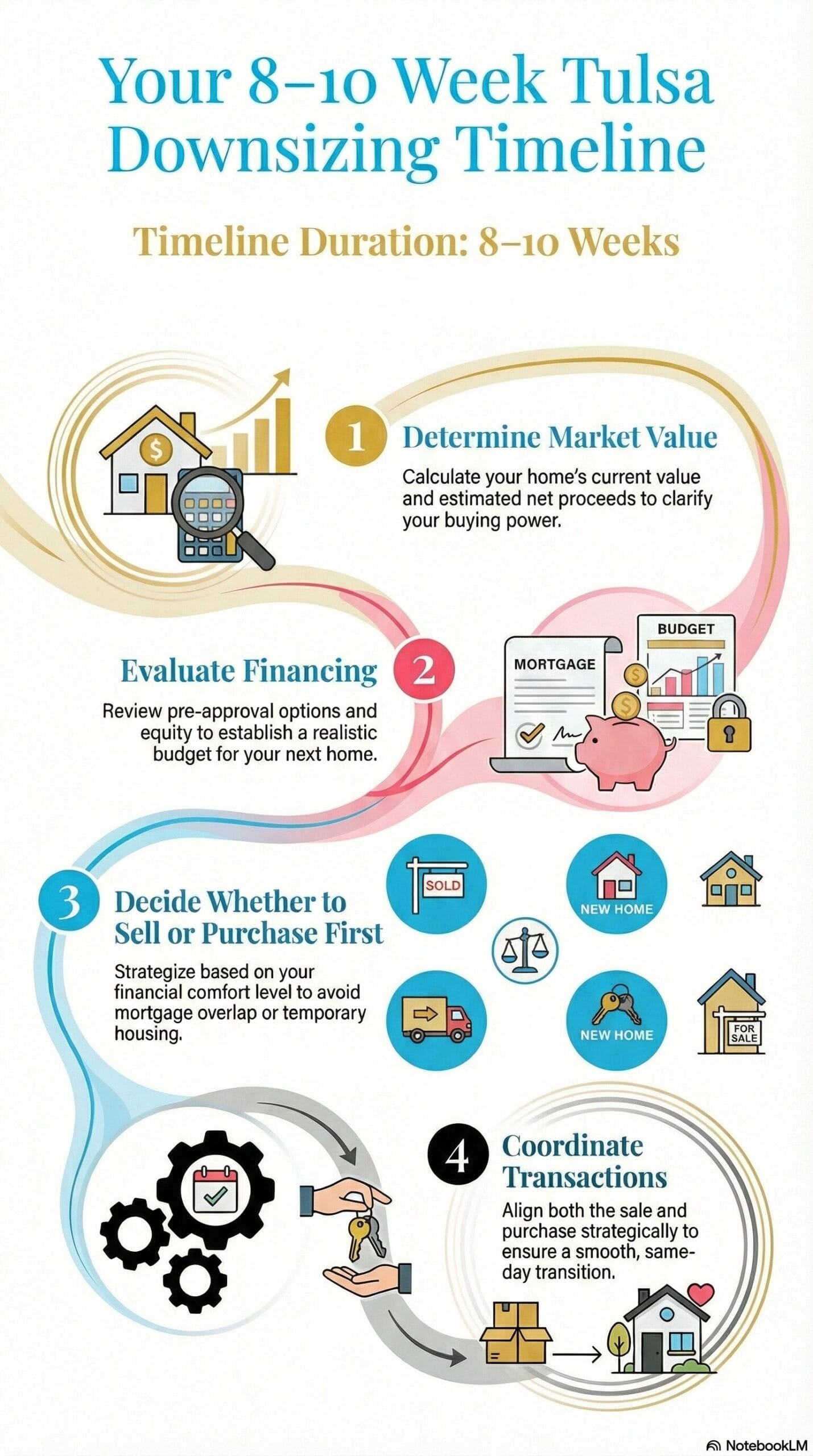
Most downsizing transitions in Tulsa follow four steps:
Determine your home’s current market value and estimated net proceeds
Evaluate financing options and pre-approval for your next home
Decide whether to sell first or purchase first
Coordinate both transactions strategically to avoid temporary housing
Downsizing in Tulsa often requires coordinating pricing strategy, financing, and closing timelines so the sale and purchase align cleanly.
The fastest first step is a home value and net proceeds estimate. That determines your true buying range before you tour downsizing homes.
The visual roadmap below outlines how most Tulsa downsizing transitions move from valuation to closing within 8–10 weeks.
The Emotional and Lifestyle Impact of Downsizing in Tulsa
Downsizing isn’t only practical — it’s emotional.
Many of my clients share that it feels:
Bittersweet at first — letting go of a home full of memories
Relieving once the process begins — especially when the new lifestyle becomes clear
Empowering in the end — moving toward a home and rhythm of life that fits your future, not your past
The goal is a home that supports where you’re going, not where you’ve been.
The Financial Impact of Downsizing in Tulsa
Downsizing in Tulsa is not only a lifestyle decision — it is also a financial strategy. Many homeowners choose to downsize in order to reduce ongoing expenses, free up equity, or improve long-term financial flexibility.
How Downsizing Can Affect Your Finances
When moving from a larger home into a smaller property, Tulsa homeowners often experience changes in:
Monthly mortgage payments
Property taxes
Home insurance premiums
Utility costs
Yard maintenance and landscaping expenses
Long-term repair and upkeep costs
In many Tulsa neighborhoods, homeowners who purchased their property five to fifteen years ago have built significant equity due to appreciation and mortgage paydown. That equity can create options when transitioning into a smaller home. In balanced Tulsa market conditions, well-prepared homes often receive strong buyer activity within the first two weeks of listing.
How Equity Is Used When Downsizing
Equity is the difference between your home’s current market value and your remaining mortgage balance.
Tulsa downsizers often use their equity to:
Make a larger down payment on the next home
Purchase a smaller home with a reduced mortgage
Pay cash for a lower-priced property
Eliminate private mortgage insurance (PMI)
Reduce overall monthly housing expenses
For some homeowners, downsizing creates an opportunity to decrease debt. For others, it allows them to reallocate funds toward retirement planning, travel, investment accounts, or lifestyle goals. Some Tulsa homeowners use downsizing as part of a retirement transition strategy, reducing housing expenses while maintaining proximity to family and medical services.
Estimated Value vs. Net Proceeds
Online home estimates rarely reflect true net proceeds.
What matters when evaluating downsizing in Tulsa is:
Realistic market value
Likely sale price based on current demand
Closing costs
Mortgage payoff
Estimated net proceeds after expenses
Understanding your projected net proceeds provides clarity before choosing a price range for your next home.
When Downsizing Does Not Lower Monthly Payments
In some cases, downsizing does not automatically reduce housing expenses — particularly if moving into:
A newer construction home with higher price per square foot
A condominium with HOA dues
A more desirable location with higher property values
This is why a structured financial review is essential before beginning the downsizing process.
A professional home value analysis combined with a financing consultation helps determine whether downsizing will reduce expenses, maintain a similar payment, or shift financial priorities in a different direction.
Where to Downsize in the Tulsa Metro
The Tulsa metro offers a wide range of downsizing options, from single-level patio homes with HOA-managed landscaping to walkable condominiums near major medical centers, retail districts, and highway corridors. The right area depends on whether you prioritize healthcare access, retail convenience, newer construction, historic character, or proximity to family.
Below are some of the most common areas Tulsa homeowners consider when downsizing.
South Tulsa
South Tulsa is one of the most popular areas for downsizers seeking patio homes, gated communities, and single-level properties near major healthcare and retail centers.
Many South Tulsa neighborhoods are located near:
Saint Francis Hospital
St. Francis Health System clinics
Woodland Hills Mall
The Memorial Drive and Mingo Road retail corridors
Highway access near US-169 and the Creek Turnpike
Downsizers in South Tulsa often purchase:
Single-story patio homes with HOA lawn maintenance
Smaller homes in established neighborhoods near 71st Street, 81st Street, and 101st Street
Gated communities with low-maintenance landscaping and private drives
South Tulsa appeals to homeowners who want convenience, medical access, and strong resale stability without leaving established, high-demand areas of Tulsa County.
Broken Arrow
Broken Arrow offers strong value for downsizers seeking quiet suburban neighborhoods with convenient access to both healthcare and walkable entertainment.
Key location anchors include:
Ascension St. John Broken Arrow
The Rose District in downtown Broken Arrow
Retail and medical offices along Elm Place and Kenosha Street
Quick access to Highway 51 and the Creek Turnpike
Many downsizers in Broken Arrow choose:
One-level homes built in the early to mid-2000s
Patio home communities with HOA-managed landscaping
Smaller resale homes in established subdivisions near County Line Road and Olive Avenue
Broken Arrow provides suburban comfort with expanding retail, medical access, and community amenities while remaining within Tulsa County.
Jenks
Jenks attracts downsizers who want a strong community feel combined with proximity to riverfront development and modern amenities.
Major anchors in Jenks include:
Riverwalk Crossing
The Arkansas River Trail System
Hillcrest Hospital South
The Oklahoma Aquarium
Highway access via US-75
Common downsizing options in Jenks include:
Smaller executive-style homes with main-floor primary suites
Patio home communities near 111th Street South and Elm Street
Resale homes in established subdivisions near the Jenks High School corridor
Jenks appeals to homeowners who want newer housing stock, river access, and proximity to both Tulsa and South Tulsa employment corridors.
Midtown Tulsa
Midtown Tulsa is ideal for downsizers who value mature trees, historic architecture, and walkability.
Midtown anchors include:
Utica Square
St. John Medical Center
The Gathering Place
Brookside (Peoria Avenue)
Cherry Street (15th Street)
Downtown Tulsa via the Inner Dispersal Loop (IDL)
Downsizing options in Midtown often include:
Smaller historic homes with updated interiors
Renovated bungalows with single-level living
Condominiums near Brookside, Cherry Street, or Downtown Tulsa
Midtown appeals to homeowners seeking character, established neighborhoods, and access to Tulsa’s most walkable dining and cultural districts.
Bixby
Bixby is popular among downsizers seeking newer construction, modern floor plans, and expanding retail infrastructure.
Key corridors include:
Memorial Drive
121st Street South
Retail development along 151st Street South
Access to the Creek Turnpike
Common downsizing properties include:
Single-level homes built within the past 10–15 years
Patio homes in HOA-managed communities
Smaller new construction homes with open layouts and energy-efficient features
Bixby appeals to buyers who want contemporary design, neighborhood amenities, and long-term growth potential within Tulsa County.
Owasso
Owasso attracts downsizers looking for convenience and strong healthcare access north of Tulsa.
Primary anchors include:
Bailey Medical Center
Highway access via US-169
Retail centers near 86th Street North and 96th Street North
Proximity to Tulsa International Airport
Downsizing options often include:
Single-story homes in established neighborhoods
Smaller newer homes with minimal yard maintenance
Townhome-style properties with simplified upkeep
Owasso offers accessibility, retail convenience, and strong residential demand while remaining close to central Tulsa.
Condominium and Townhome Communities Across Tulsa
For true lock-and-leave living, Tulsa offers condominium and townhome developments across multiple districts, including:
Midtown near Utica Square
South Tulsa near Yale Avenue and Memorial Drive
Downtown Tulsa near the Blue Dome District and Brady Arts District
Jenks near Riverwalk Crossing
These properties typically include HOA-managed exterior maintenance, landscaping, and amenities such as gated access, community pools, or secured parking.
If you would like to compare commute times, proximity to Saint Francis or Hillcrest systems, access to retail corridors like Memorial Drive or Elm Street, and overall neighborhood lifestyle, explore the Tulsa Neighborhoods and Lifestyle guide for a deeper breakdown.
What to Look for in Your Next Home
Here are the features Tulsa downsizers prioritize most:
One-level living or main-floor primary suites
Open, functional floor plans
Low-maintenance yards or HOA coverage
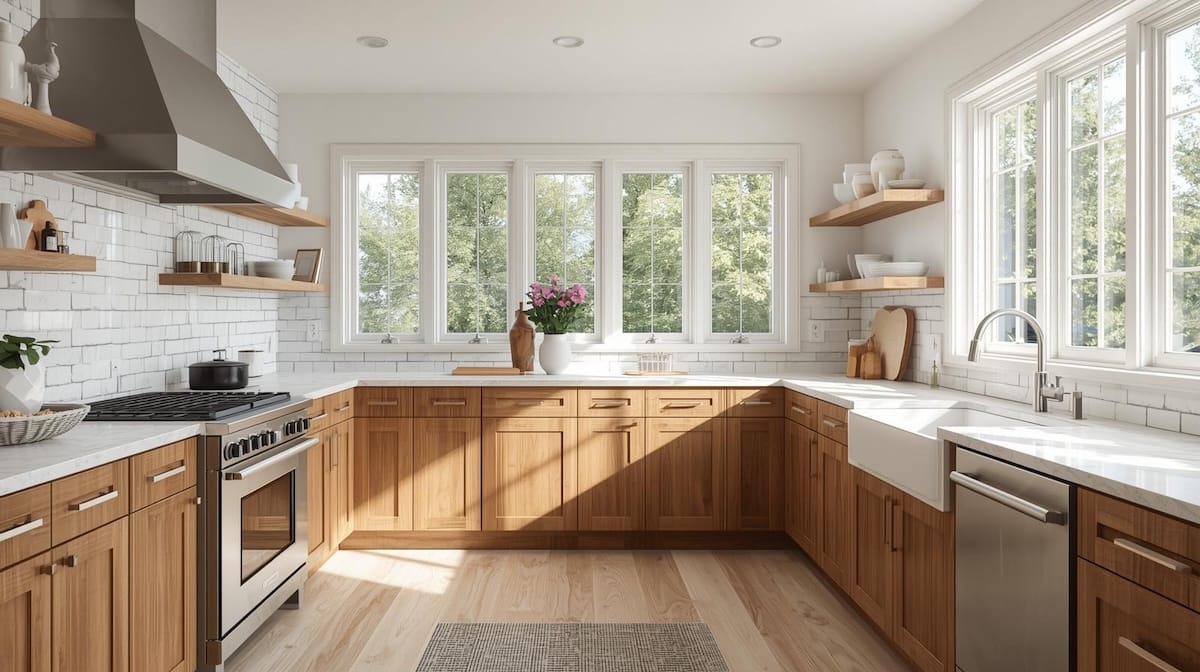
Updated kitchens and bathrooms
Walkability or close-by amenities
Comfortable hosting space for family gatherings
Quiet, established neighborhoods
Easy access to medical care and shopping
If you’d like a step-by-step look at the buying process itself, my Buying a Home in Tulsa guide explains timelines, inspections, and what to expect at each stage.
Browse Homes Perfect for Downsizing
Start exploring homes that match your next chapter — from single-story homes to townhomes, condominiums, and low-maintenance communities.
Your Complete Downsizing Guide
Dive deeper into the full process, including emotional tips, step-by-step planning, and how to sell your current home with confidence.
→ Read the Full Downsizing in Tulsa Guide

How I Help Downsizing Clients
Downsizing transactions in the Tulsa metro require strategic pricing, timing coordination, and financial planning.
When you work with me, you get:
✔ A market expert with over 25 years of experience
✔ A clear downsizing plan based on your goals
✔ Neighborhood recommendations tailored to your lifestyle
✔ Guidance on preparing your current home for sale
✔ Full coordination of buying AND selling if needed
✔ Kind, thoughtful support through the entire transition
My goal is to make your move feel calm, organized, and empowering.
Many downsizers are buying and selling at the same time, and my Buy and Sell a Home Simultaneously in Tulsa guide explains how to do that with less stress and fewer surprises.
Ready for the Next Chapter? Let’s Talk.
Whether you’re thinking about downsizing in the next few months or simply exploring possibilities, I’m here to help you make the best decision for you — not pressure you into anything.
More Downsizing Articles & Resources
If you’re exploring what downsizing might look like for your next chapter, you may find these helpful.
Browse all of my downsizing-related blog posts, tips, guides, and checklists here:
Frequently Asked Questions About Downsizing in Tulsa
Is downsizing a good idea in Tulsa?
Yes, downsizing can be a strong option for Tulsa homeowners who no longer need the space or maintenance of a larger property. Many downsizers benefit from selling in established neighborhoods with steady demand and purchasing lower-maintenance homes such as patio homes, townhomes, or single-level properties. The right decision depends on your lifestyle goals, equity position, and preferred neighborhood within the Tulsa metro.
What types of homes are best for downsizing in Tulsa?
The most common downsizing options in Tulsa include single-level homes, patio homes with HOA-maintained yards, townhomes, condominiums, and smaller homes in established neighborhoods. Many downsizers prioritize one-story layouts, updated interiors, walkability, and proximity to shopping or medical care.
What price range do downsizers typically shop in around Tulsa?
Downsizers in the Tulsa metro often purchase homes priced between $250K–$600K, depending on location, amenities, and property type. Patio homes and condominiums may fall on the lower end of that range, while newer single-level homes in South Tulsa, Bixby, Jenks, or Broken Arrow may reach higher price points.
Can I downsize and buy a home before selling my current house?
Yes, some Tulsa downsizers purchase their next home before selling, depending on available equity and financing options. Others choose to sell first to avoid mortgage overlap. Bridge loans, HELOCs, or contingent offers may be used depending on financial comfort level and market conditions.
How long does the downsizing process take in Tulsa?
Most downsizing transitions in Tulsa take approximately 8–10 weeks from listing to closing when buying and selling are coordinated. Timelines vary depending on home preparation, buyer demand, inspections, and financing approval. Strategic planning reduces the likelihood of temporary housing or rushed decisions.
Are there HOA or low-maintenance communities in Tulsa for downsizers?
Yes, Tulsa offers many HOA-managed communities designed for low-maintenance living. Patio home neighborhoods, gated communities, townhome developments, and condominium complexes across South Tulsa, Broken Arrow, Jenks, Bixby, and Midtown provide options for simplified upkeep and lock-and-leave convenience.
How do I know how much equity I have before downsizing?
The best way to determine your equity is through a professional home value analysis. Equity equals your home’s current market value minus your remaining mortgage balance. Understanding your estimated net proceeds helps determine your buying power and target price range before beginning your downsizing search.
Should I renovate my current home before downsizing in Tulsa?
In many cases, minor updates such as paint, lighting, and staging provide stronger returns than major renovations. A pre-listing strategy consultation determines which improvements increase sale price and which upgrades are unnecessary.
Does downsizing in Tulsa affect property taxes?
Property taxes in Tulsa County are based on assessed value. Downsizing into a lower-priced home may reduce annual property tax obligations, though tax differences depend on purchase price, exemptions, and county assessments.
What are the downsides of downsizing in Tulsa?
Downsizing in Tulsa can offer financial and lifestyle benefits, but it is not automatically the right move for every homeowner. Potential downsides may include:
Higher price per square foot in newer construction communities
HOA dues in patio home, townhome, or condominium developments
Moving costs and transaction expenses
Emotional difficulty leaving a longtime home
Limited inventory in highly desirable low-maintenance neighborhoods
In some cases, downsizing does not significantly reduce monthly expenses — particularly when moving into newer homes, gated communities, or walkable districts with higher demand.
A structured evaluation of your home’s equity, estimated net proceeds, target neighborhood, and long-term goals helps determine whether downsizing improves your financial position or simply shifts housing costs.
Downsizing in Tulsa should be evaluated based on net proceeds, monthly payment comparison, HOA obligations, and long-term lifestyle goals.
You Deserve a Home That Fits Your Life Today
Downsizing in Tulsa is both a financial and lifestyle decision. A structured evaluation of your equity, timeline, and neighborhood options ensures you make the right move at the right time.
Deborah Green provides structured downsizing strategy sessions for Tulsa homeowners evaluating their next move.
Choose what works best for you:
📞 Call or Text Me
📧 Email Me
🏡 View Downsizing Articles
📍 Schedule a Consultation